CASE STUDY

Turning Product Quality into Value for King’s Favour Wine

The Challenge

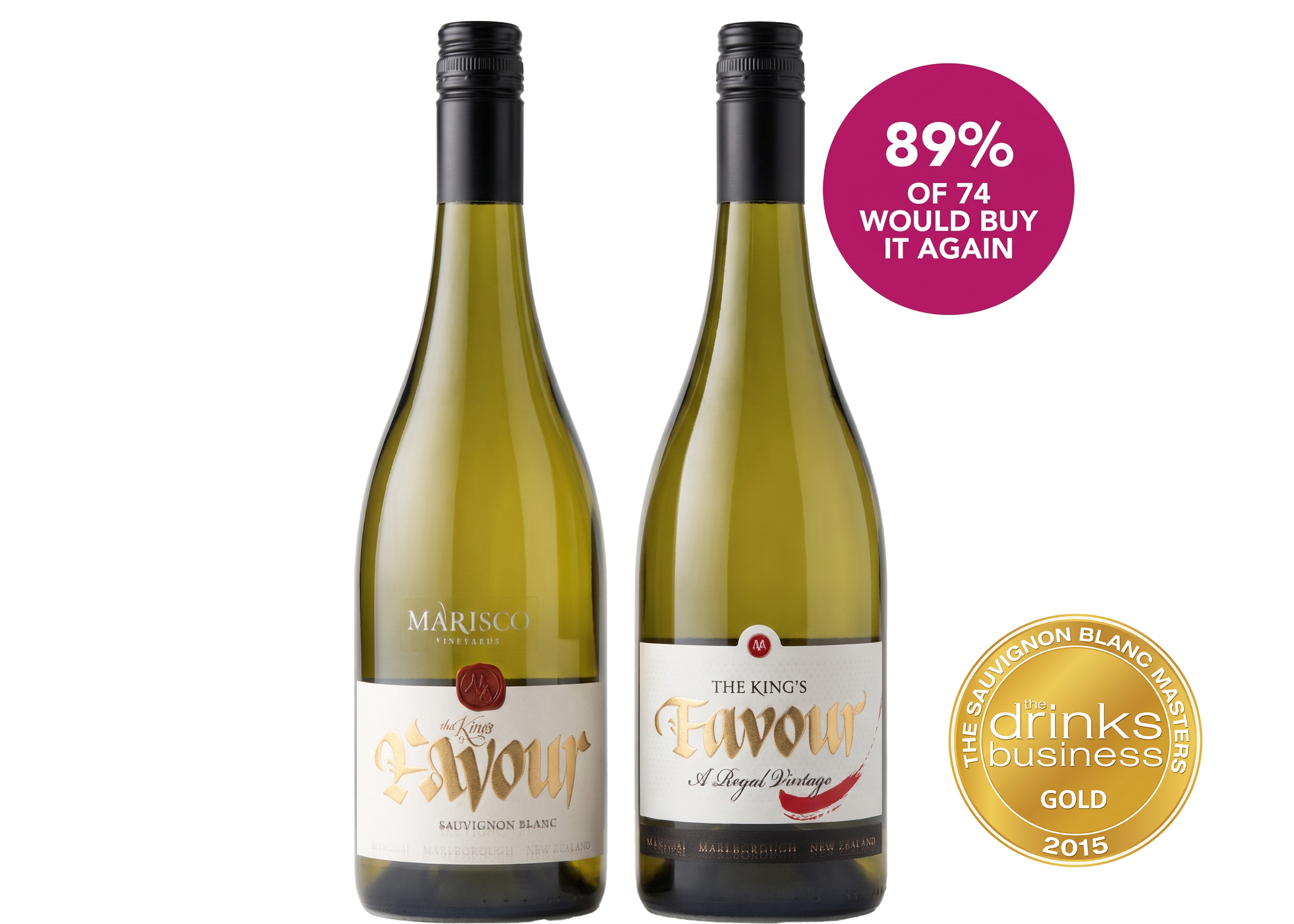
King’s Favour was winning blind tastings. Regular drinkers consistently rated it ahead of other wines in the category, so the quality was there, but you wouldn’t have known it from the shelf price or the way the bottle sat among its competitors. 

The brand team started wondering: was the wine actually the problem? Or was the packaging just failing to keep up with what was inside?  

If it was the latter, there might be an opportunity to update the design, move the price, and not lose a single sale in the process, but they needed evidence before they’d move.

The Solution

Split Second Research worked with the brand to understand what the King’s Favour bottle was really communicating, emotionally, not just rationally, and how that compared to the rest of the category. Implicit response testing let us get underneath surface opinions. 

Not “do you like this label” but how does it make you feel, often before you’ve had a chance to think about it. We focused on the cues that matter most for quality and premiumness to understand where the pack was working, and where it wasn’t. We also looked at price. 

What were people expecting to pay for wines in this space? What was the ceiling? That gave us something concrete: not just how the packaging was being perceived, but whether there was room to move if it improved.

The Outcomes

The picture that came back was pretty clear. While King’s Favour was already positioned towards the higher end of the category on price, its packaging was not consistently associated with premium cues. In several areas, competitors were doing more to signal quality and craftsmanship. 

But here’s what mattered: consumers said they’d pay more, if the bottle looked the part. And among people who already knew and liked the wine, the risk of losing them through a price increase looked small. That was enough. The brand moved forward with new packaging and a higher price point and sales didn’t fall. They went up.

This is a good example of what implicit research can find that traditional methods often miss, not whether people like something, but whether it’s working as hard as it should be.

FROM THE CLIENT

King’s Favour won Gold in the Sauvignon Blanc Masterclass at the Drinks Business Awards 2015

“Our best-ever selling white wine”
Majestic Wine Warehouses Ltd

If you’d like to understand how this approach can be applied to your own challenge, get in touch with one of our market research experts, here.

Case Studies

King’s favour wine

Turning Product Quality into Value for King’s Favour Wine

King’s Favour was winning blind tastings. Regular drinkers consistently rated it ahead of other wines in the category, so the quality was there, but you wouldn’t have known it from the shelf price or the way the bottle sat among its competitors.
The brand team started wondering: was the wine actually the problem? Or was the packaging just failing to keep up with what was inside?
If it was the latter, there might be an opportunity to update the design, move the price, and not lose a single sale in the process, but

Read More
Understanding Emotional Responses to Fragrance in Context
Fragrance in context

Understanding Emotional Responses to Fragrance in Context

A global fragrance company wanted to profile how four new fragrances were experienced, with a specific focus on their functional emotional use.
The goal was to understand which fragrances naturally support different emotional states, for example, which scents help calm or reduce anxiety in work environments, and which feel more appropriate in contexts requiring reassurance or comfort, such as high-trust or service-led settings.
This introduces a more

Read More
Scroll to Top