The Free Sample Trap: Why On-the-Spot Feedback Tells You What People Think You Want to Hear
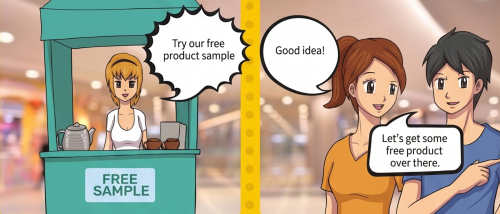
Six years ago we created a comic strip about a couple trying a free product sample at a shopping centre. At the


Before a brand can establish its positioning, it needs to fully understand the needs and drivers of its market. What are consumers looking for and where are the gaps?
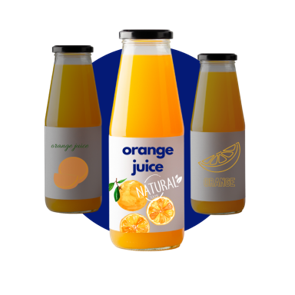
We test the market category that a brand or product sits in. We present respondents with a description of the category, with or without images of brands or products from the category.
To understand the category, we use our implicit / emotional reaction time test (IMPRESS). We use this in conjunction with our explicit or rational response test (EXPRESS or FAST).
We provide several outputs:
Implicit reaction time tests are objective and hence do not rely of self-report (subjective) or introspection. Self-report has its limitations. It is a method that is very good for screening (making sure we have the right target group of consumers in our survey) and for some behavioural aspects (such as which social media platforms they use, how frequently they shop online, and so on).
However, if a business wants to be able to predict behaviour, then relying solely on self-report is high risk (see Betch et al, 2001; af Wåhlberg, 2009). Our FAST test is a forced-choice time-limited response and combined with implicit response tests gives a very strong measure as we have found in many studies.
Premium fuel, vitamins / minerals / supplements, contact lenses, numerous medications, air fresheners, numerous financial services, supermarkets, fast food, holiday resorts, holiday letting, bottled water, skin care, parent and child, restaurant dining, bar-restaurants, insurance, comparison sites / services, loan companies in Australia, juices, sugary soft drinks, breakfast toast toppings, toilet tissue, yogurt, feminine care, contraceptives, canned & bottled beers, convenience stores, dental care and implants, eye drops, football sponsorship, football TV channels, dry dog food and treats, biscuits, and so many more!
This test is usually carried out alongside brandy equity and brand positioning tests. See a list of some of the thousands of brands we have assessed in their categories.
What can you do with a market category analysis?
Once the category analysis is done, it is used to test strategic decisions and communication campaigns. We use the data to make predictions about whether proposed new products, new adverts, new concepts, and so on will have an impact on sales. We can identify the extent to which any new stimulus or concept is able to trigger the right category drivers.
Can AI be used to assess brand assets?
We have built an AI tool to assess brand assets, called Amethyst Predictive Intelligence. It uses an AI model trained on survey data, one respondent at a time, to learn the key drivers of sales. Once built, this model serves two purposes. First, it enables simulation of “what if” scenarios, showing how changes to product features or messaging would likely shift intent. Second, it generates digital twins (synthetic respondents) that can be used to test new ideas quickly without requiring new surveys.
The Amethyst Asset Tester builds directly on this foundation. Through a four-step flow, asset selection, attribute selection, model import, and AI evaluation, it scores new creative executions against the trained model to predict their likely impact on consumer intent. The result is a system that can evaluate fresh advertising without commissioning new fieldwork. This is used for testing ads, new packaging, new claims, new product ideas, new positioning, and other creatives.
Together, these two components form a closed loop: the modelling layer learns from real respondents, and the asset testing layer applies that learning to new creative decisions at speed and low cost.
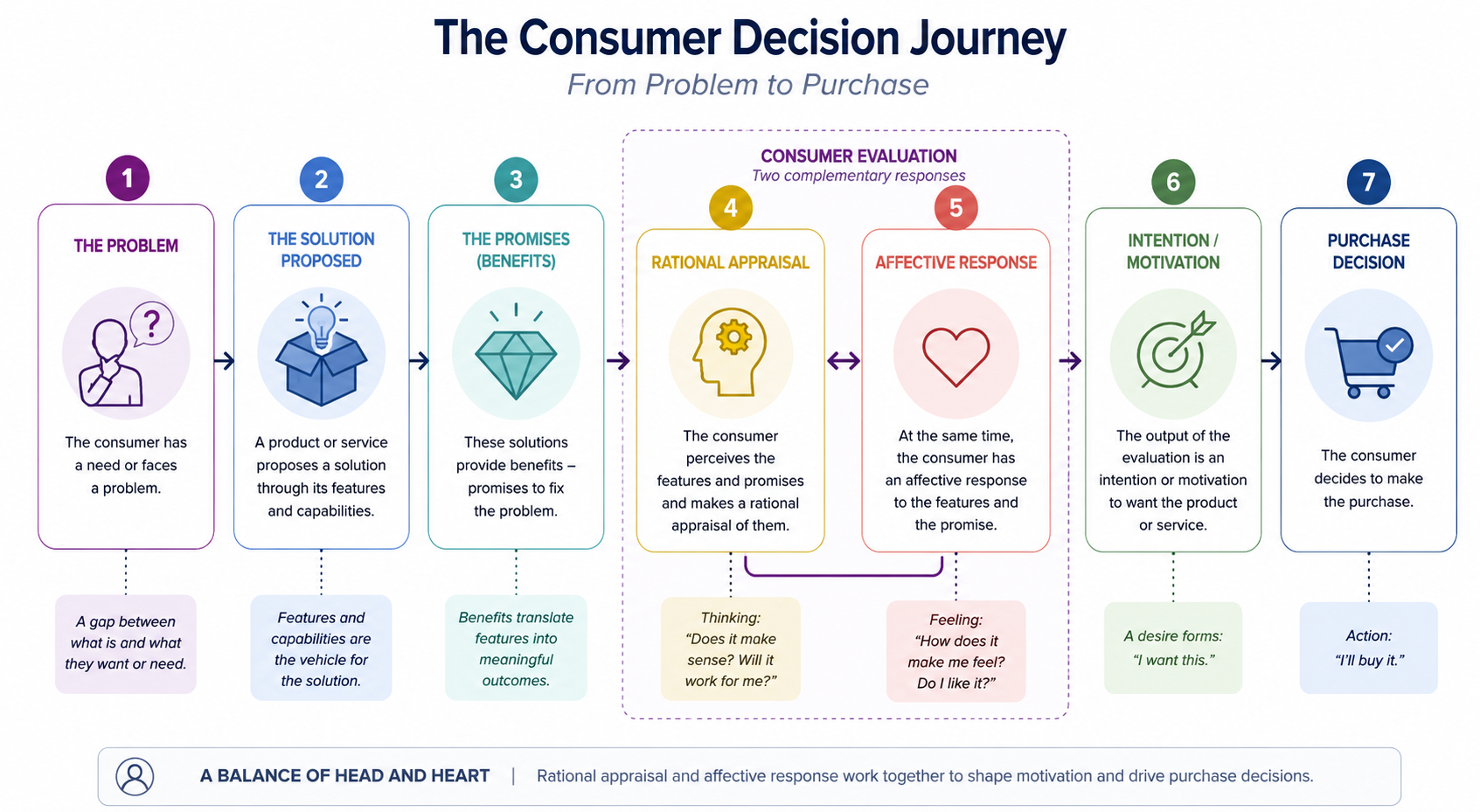
The Consumer Decision Journey
From Problem to Purchase
A BALANCE OF HEAD AND HEART
Rational appraisal and effective response work together to shape motivation and drive purchase decisions
What is the basis on which the AI model makes predictions about new brand assets?
Following on from decades of research in human decision making and consumer psychology (Cognitive-Affective-Conative model), we have developed the BRAIN model. It stands for Behaviour, Rational, Affective, Intent, Network.
Behaviour – we build in category behaviour into the model. Typically this will be the products each consumer buys, considers, and rejects. It also includes their culture / location if needed, so that the predictions made are culture-specific.
Rational appraisal – in our surveys we measure beliefs and explicit evaluations of product or service features and benefits. These are cognitive or rational judgments. They involve reasoning, comparison, and expectation.
Affective appraisal – this is where implicit responses do their work. Implicit reaction time testing works best when it measures feelings: relief, confidence, pride, enjoyment, reduced stress, improved sense of control and so on. Affect is not just about emotions, it’s about value: “Will this make me feel the way I want to feel?”. This is the emotional or experiential payoff that a product or service is aimed at delivering.
Intent – this is the purchase motivation, decision to buy, or actual purchase behaviour. We can measure these through questions about purchase history, purchase intent, willingness to pay, or actual data from purchase receipts.
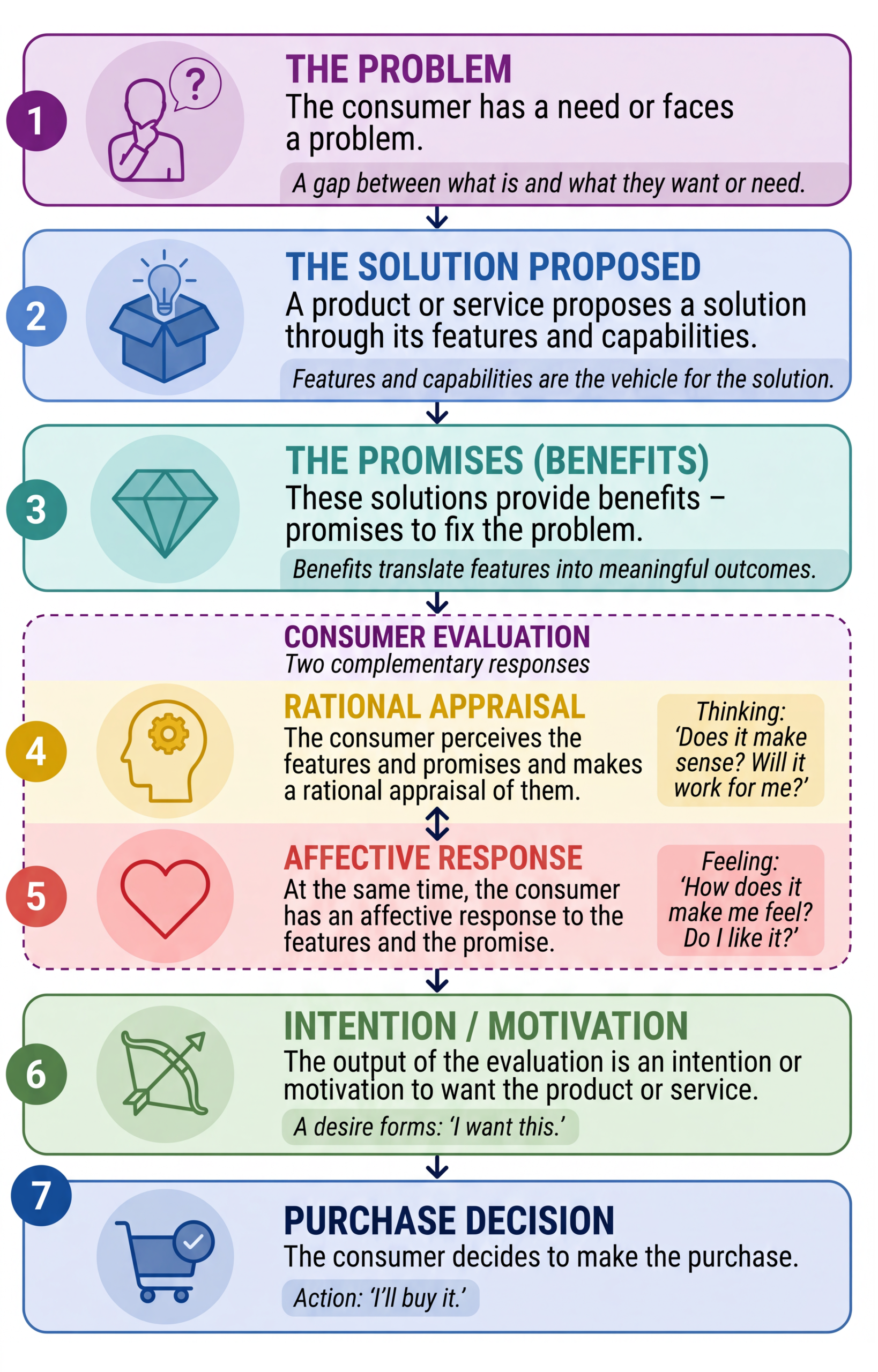
Network – this refers to the decision-making network or sequence that are relevant for making predictions about consumer behaviour: (1) the consumer has a problem, (2) a product or service proposes a solution to the problem though its features and capabilities, (3) these proposed solutions provide benefits – “promises” to fix the problem the consumer has, (4) the consumer perceives the features and promises and makes a rational appraisal of them, (5) at the same time the consumer has an affective response to the features and the promise, (6) the output of the sequence is an intention or motivation to want the product or service, (7) the consumer decides to make a purchase.
All of this data are collected form our surveys. They feed into the modelling process. Some elements will be more important and more predictive than others. Some rationalised views may be important for the consumer, but not predictive of their buying behaviour.
The data are used to train a large neural network. It uses associative or machine learning though thousands of brain-like processing units. It identifies patterns in the data, especially looking at how all of the behavioural, rational, affective appraisals are associated with the final purchase decisions. This gives us the final list of appraisals that predict a purchase. This list is weighted, some are vital others less important, but in combination they all serve to convince consumers to buy or not to buy.
Once we have the model of a specific market category, we use it to simulate any kind of “intervention” by a brand in the category, such as an ad, a marketing concept, a communications strategy, new packaging, a new product concept, a marketing video, taglines, claims, and so on. We do this in our Amethyst Asset Tester. It is multi-model, meaning that it can assess images, text, audio, and moving images, and combinations of these.
Segmentation
In understanding a market category, it is often good to know your ideal customer profile. This means targeted marketing strategies based on customer segmentation.
Split Second Research can assist you in identifying your customer segments and reveal your individual customer personas. This is an automated function in our survey platform. You can get to know your customer targets, exactly what they want explicitly and implicitly.

Betsh, T., Plessner, H., Schwieren, C., & Gütig, R. (2001). I like it but I don’t know why: A value-account approach to implicit attitude formation. Personality and Social Psychology Bulletin, 27, 242-253. https://doi.org/10.1177/0146167201272009 [This examines how attitudes and feelings can be acquired implicitly]
af Wåhlberg, A. (2009). Driver Behaviour and Accident Research Methodology. Ashgate Publishing Limited. http://dx.doi.org/10.1201/9781315578149 [This is a critique of subjective research methods that have been used to try to predict behaviour]
Updated July 2024 by Dr Eamon Fulcher PhD
Applications
Use our technology, founded in consumer neuroscience, to understand your market category.
Complete an enquiry form to arrange a meeting with us:
Six years ago we created a comic strip about a couple trying a free product sample at a shopping centre. At the
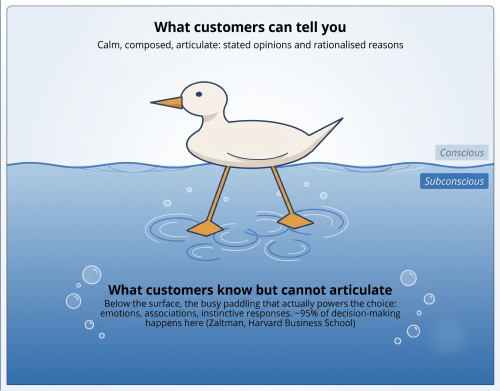
Every year, thousands of new products launch on the back of research that said they would succeed. Concept tests came back positive. Focus groups nodded along. Survey respondents said,
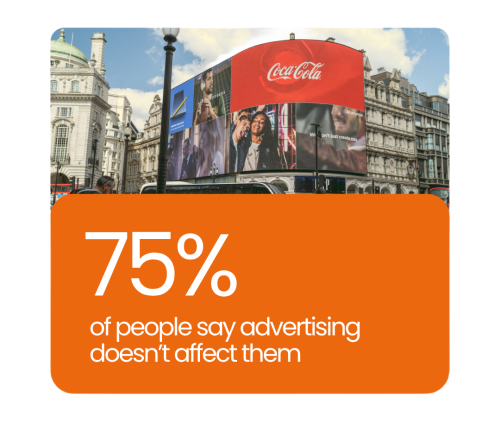
75% of people asked to rate an ad, claim advertising doesn’t affect them.
So what exactly are they rating? And why are we