CASE STUDY

From 2 Months to 2 Weeks: What a packaging study 10 years ago tells us about where consumer research Is heading

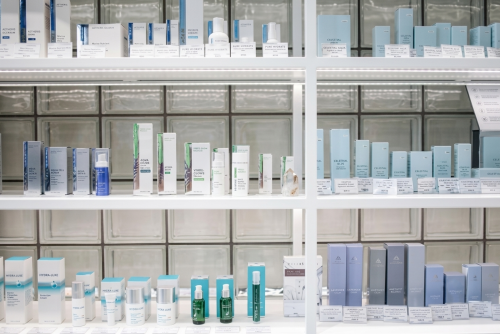
A decade ago, a global cosmetic brand approached Split Second Research with a competitive problem that their existing research could not solve.

Their direct competitor’s packaging had converged closely with their own. Visually, the two brands had drifted toward each other, and the competitor was gaining market share as a result.

The client needed to understand, at an intuitive and emotional level, which visual assets consumers associated with their brand, and which had slowly become associated with the competition.

This is precisely the type of question that conventional research struggles with. Asked directly, consumers cannot tell you why one pack feels more like “their” brand than another. The association is implicit, formed below the level of conscious reasoning, and survey scales cannot reach it.

The Study

We designed a two-country implicit testing study, running across the USA and China simultaneously.
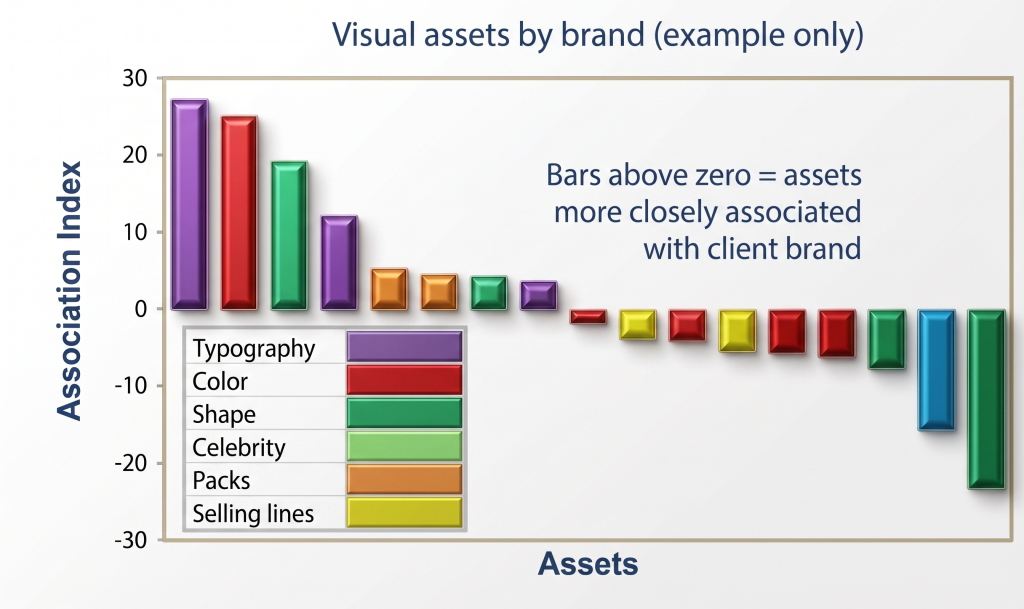
450 women drawn from three consumer segments participated online, evaluated against a comprehensive range of visual assets: typography, colour, shape, celebrity endorsers, pack designs, and selling lines.

The methodology was our IMPRESS Implicit Asset Evaluation, structured to reveal the strength and direction of intuitive brand associations.

Each asset was scored against an Association Index, with scores above zero indicating stronger association with the client brand and scores below zero indicating drift toward the competitor.

The findings were unambiguous. Several assets the brand had invested in heavily were, in practice, more strongly associated with the competitor than with the client. Others, less prominently featured in the brand’s current communications, were robustly owned.

The China versus USA comparison surfaced additional nuance: consumer perception and emotional needs differed meaningfully between markets, with implications for celebrity endorser strategy in particular.

The research fed directly into the brand’s packaging redesign and re-launch strategy.
The client described it as “truly first-class research.”

Timeline: two months from kick-off to final delivery.

What Has Changed

That study represents what was, at the time, an efficiently delivered piece of rigorous neuromarketing research. By the standards of the field, two months was fast. Today, with Deeplight, the same study would be delivered in two weeks.

The reduction in time is not cosmetic. It reflects a fundamental change in how the methodology is operationalised, from stimulus management and fielding through to data processing and output generation. The time saving translates directly into cost saving for the client, because research time is resource time. But the more significant development is not speed. It is what becomes possible after the study is complete.

The BRAIN Model and Synthetic Respondents

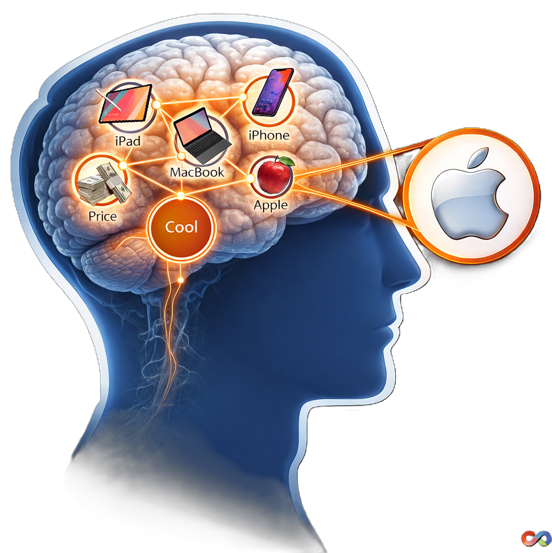
When we run a study through Deeplight, we do not simply deliver findings. We build a BRAIN model, a structured representation of how that consumer segment thinks, feels, and associates, specific to the brand, the category, and the market. From that BRAIN model, we can generate a synthetic respondent: a model trained from real human implicit data that represents the consumer population with fidelity.
That synthetic respondent is then available to our Amethyst AI for future evaluations.

The next time the client wants to screen packaging options, creative routes, or new visual assets, Amethyst can run that evaluation before any stimulus goes near a human sample. Ideas that are unlikely to perform are filtered out early. Only the strongest routes proceed to human validation. The implication for sample costs is material. A two-country quantitative study across 450 respondents carries meaningful fieldwork expenditure.

Running that study every time the brand wants to evaluate a new creative direction is expensive. With Amethyst and a trained BRAIN model in place, many of those evaluation cycles no longer require full human samples. The model handles the screening. Human research validates the shortlist.

One Investment. Ongoing Intelligence.

The case study above took two months. It answered an important question and delivered genuine commercial value. The same study today, through Deeplight, delivers faster, at lower cost, and creates an asset, the BRAIN model and synthetic respondent, that continues to generate value for the brand across future projects. That is the difference between research as a one-time cost and research as a long-term capability.

FROM THE CLIENT

“This is truly first-class research”

If you are managing a brand through a relaunch, a competitive challenge, or a market expansion, and you want to understand the implicit associations driving consumer choice, we would be glad to talk through what this approach could look like for your category.

If you’d like to understand how this approach can be applied to your own challenge, get in touch with one of our market research experts, here.

Get in touch and find out more

brain Associations

Complete the form and we will get back to you within 24 hours or sooner

No spam. Your details are confidential.

Please call:
+44 20 4534 7458

Please dial all digits from anywhere in the world, including the UK

London address:
1 Kingdom Street, Paddington, London, W2 6BD

Case Studies

Scroll to Top