Three Ads, Three Reactions: What Implicit Testing Reveals About Creative
In 2017, we ran an implicit study on three ads for a major automotive company.
Same brand. Different models. Very different results.
CASE STUDY
Three Ads, Three Reactions: What Implicit Testing Reveals About Creative
In 2017, we ran an implicit study on three ads for a major automotive company. Same brand.
Different models. Very different results.
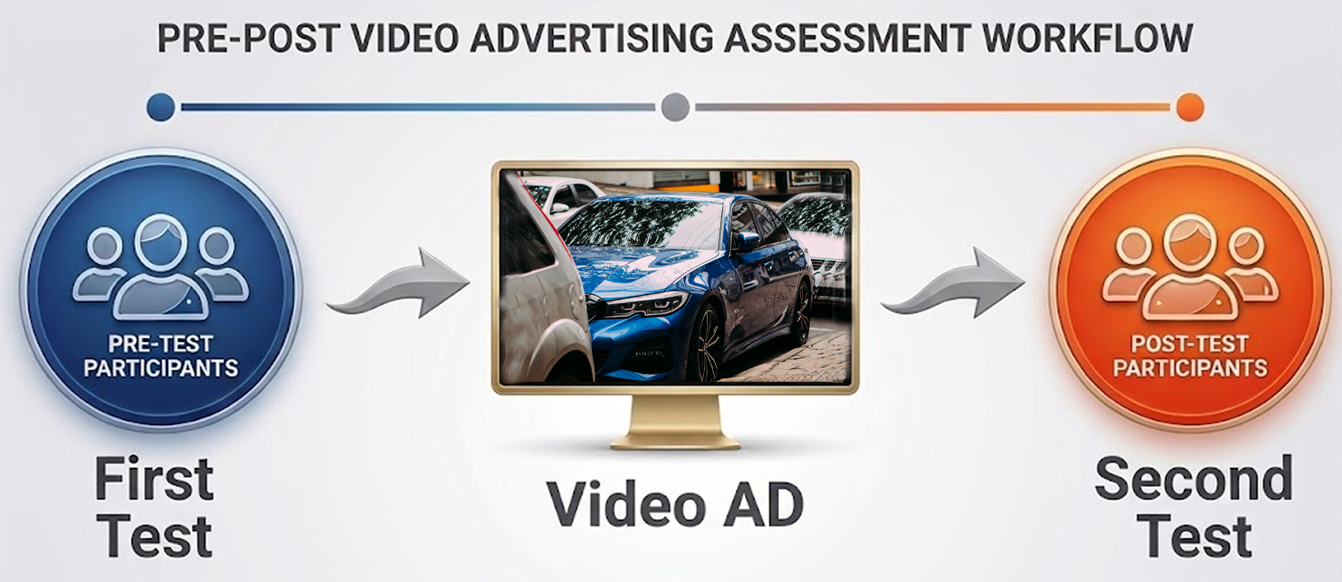
Before and after each ad, we measured instinctive associations, the things that shift in people’s minds before they have time to rationalise what they just saw. Reliability, drivability, value, appeal. We didn’t ask people what they thought. We measured what they felt.
Here is what stood out. The first ad built a genuine emotional response, especially with city drivers and men. Younger viewers picked up on modernity and value. Older viewers connected with how easy the car would be to navigate town in. The same 30 seconds, read entirely differently by age.
The second ad did something else. It spoke to the driver, not the commuter. Men responded to its futuristic feel. Women and younger audiences responded to how it handled and how solid it seemed. Older drivers barely engaged at all.
The third ad was the most polarising. It landed powerfully with men and older drivers on engineering quality and road holding. Women saw the engineering strength clearly, but still felt distant from the model.
Across all three ads, the brand reinforced what it does well: great to drive, reliable, modern, well equipped, good value. But style, standout design and efficiency were barely moved by any of the creative. That gap between what an ad is trying to say and what it actually shifts in people’s minds? That is exactly what implicit testing is built to find have time to rationalise what they just saw.
Now here is where things get interesting for what we can do today.
This work was done entirely with human respondents, which is the right way to validate creative contents. But the honest reality of ad testing is that it gets expensive quickly, especially when you are trying to evaluate several concepts before you even know which two or three deserve serious investment. So we built a different way into the process. It starts with a pilot study, a properly run implicit test with real humans. From that, we build a BRAIN Model of your category using Deeplight, our behavioural research and insight platform.
Once the BRAIN Model exists, our neural network platform, Amethyst AI, can be put to work. Amethyst becomes a synthetic respondent for your brand. Not a replacement for humans, but a trained, category-specific model that can screen creative before it ever reaches a human sample.
Think of it as a filter. For example, you have ten concepts to start with. You want to know which three are worth testing properly. Run them through Amethyst first. It will tell you, based on everything it learned from your real human respondents, which ideas are likely to shift the right associations and which are unlikely to move the needle at all.
Then you take those shortlisted concepts back to humans for proper validation. The result is that you spend the human research budget where it actually counts, on the ideas most likely to work, rather than on eliminating the ones that were never going to. It does not replace the rigour of human evaluation. It just means you arrive at that evaluation with far fewer dead ends and a much clearer sense of where your strongest creative is.
If you are producing multiple ad concepts and want a smarter way to screen them before committing to full testing, this is worth a conversation. Get in touch here.

In 2017, we ran an implicit study on three ads for a major automotive company.
Same brand. Different models. Very different results.

Email marketing is one of those things every brand uses, but very few understand what it actually does to their brand. Some emails feel engaging and

A Scandinavian TV channel was looking at acquiring broadcast rights across several European football leagues and needed to know which ones were actually