
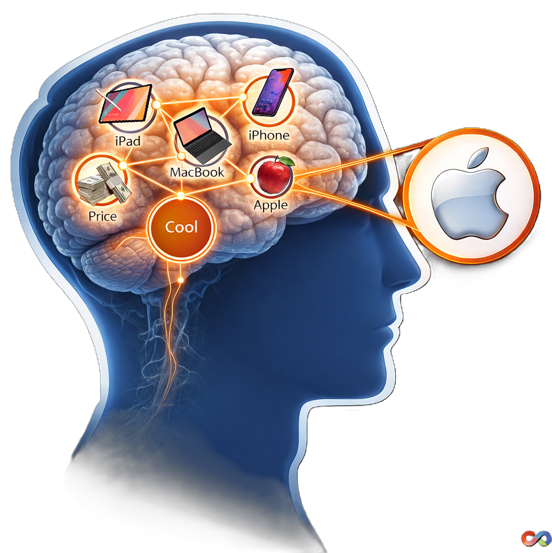

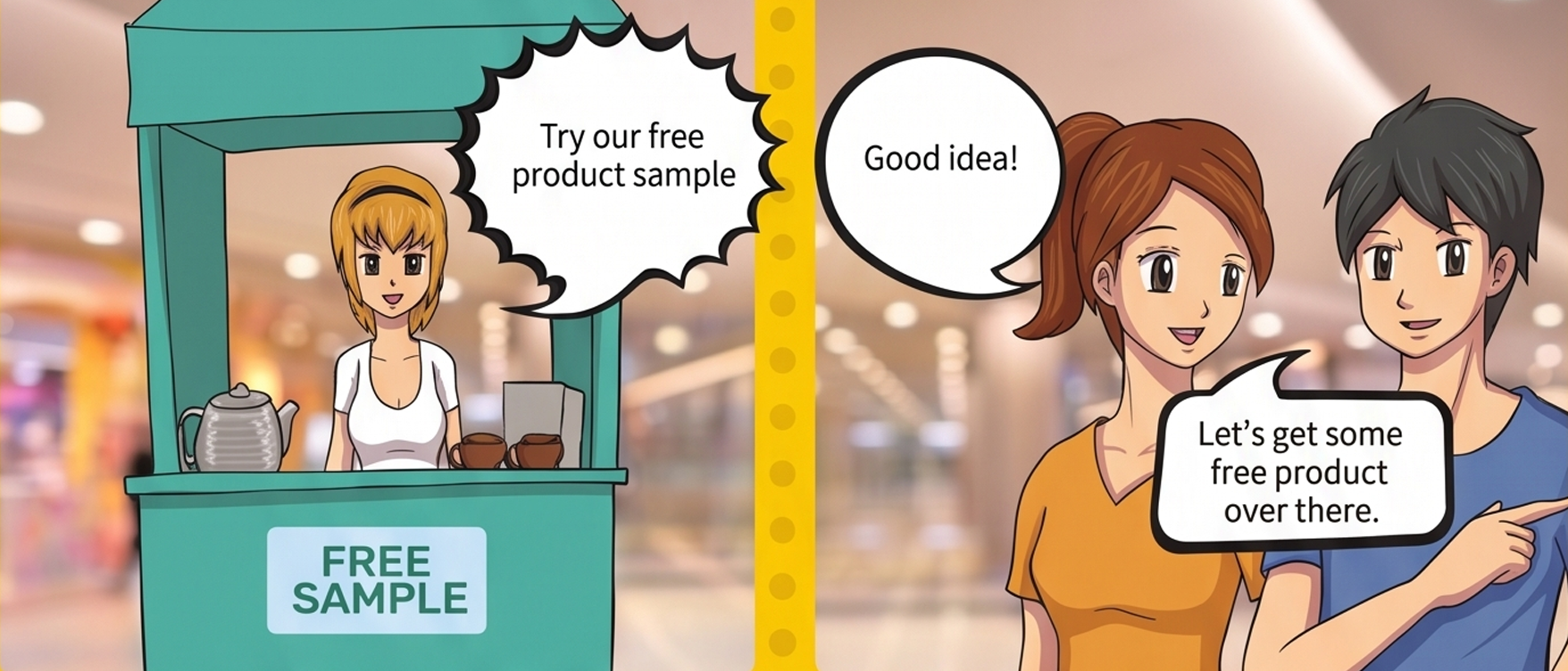
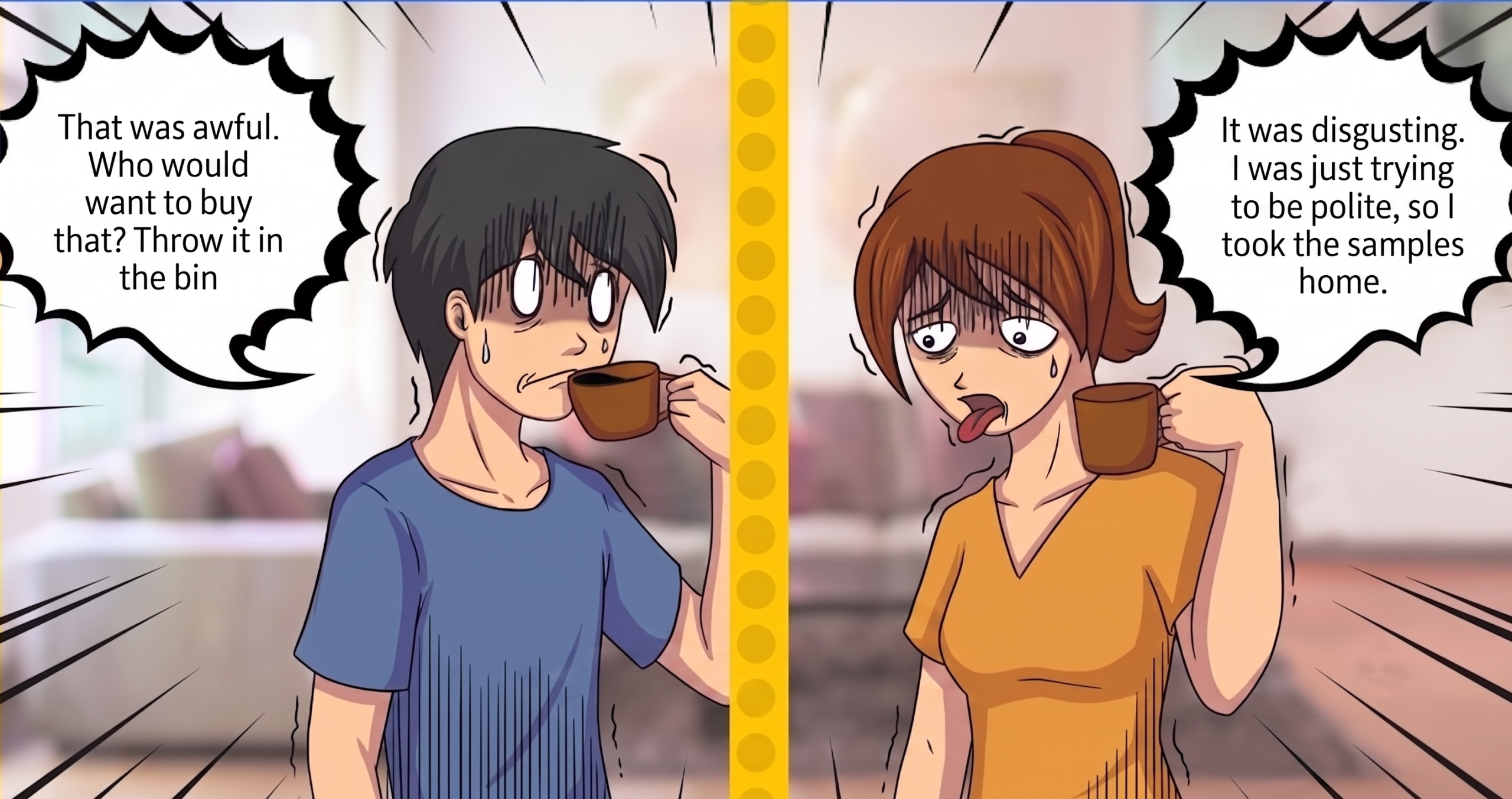
Six years ago we created a comic strip about a couple trying a free product sample at a shopping centre. At the stand, they smile and say “very nice, very tasty.” The sampler is delighted and sends them home with extras. Back at home, the truth comes out: “That was awful. Who would want to buy that?” “It was disgusting. I was just trying to be polite.”
We made it as a light-hearted illustration of a serious problem. Six years on, nothing has changed. Free sampling with on-the-spot feedback remains one of the most widely used methods for gathering consumer reactions, especially among SMEs launching new food, drink, fragrance and personal care products. It feels cheap, fast and direct. Unfortunately, it is also one of the least reliable forms of research a brand can run.
As Margaret Mead put it, what people say, what people do, and what they say they do are entirely different things.
When someone hands you a free sample and asks what you think, several well-documented biases activate at once:
Courtesy bias. Most people simply do not want to criticise a product to the face of the person offering it. Saying “very nice” costs nothing and avoids an awkward moment. The comic captures this perfectly: the couple even took extra samples home just to be polite.
Reciprocity. A free sample is a gift, and gifts create a sense of obligation. Consumers repay the gesture with kind words, not honest evaluation.
Social desirability bias. People give the answer they believe makes them look agreeable and reasonable, particularly when other shoppers are within earshot.
The halo effect. The sample is rarely tasted blind. The branding, the packaging, the stand, even the friendliness of the person sampling all colour the response before the product touches the tongue.
First-taste bias. A single sip or bite in a busy environment is nothing like real consumption. Sweeter, saltier and more intense products win first tastes but often lose over a full serving, exactly what caught out New Coke.
Observation effects. People behave differently when they know they are being watched and evaluated. A shopping centre concourse is about as far from natural consumption as it gets.
The result is a wall of polite positivity. Around 40 percent of new products fail, and a major reason is that when consumers are asked directly, researchers have no way of knowing whether they are telling the truth. Brands walk away from sampling days convinced they have a winner, then watch the product struggle at launch.

“What people say, what people do, and what they say they do are entirely different things”
– Margaret Mead
The Coca-Cola Company. New Coke: The Most Memorable Marketing Blunder Ever? https://www.coca-colacompany.com/about-us/history/new-coke-the-most-memorable-marketing-blunder-ever
Encyclopaedia Britannica. The Not-So-Sweet Backlash to New Coke. https://www.britannica.com/today-in-history/April-23-The-Not-So-Sweet-Backlash-to-New-Coke
Castellion, G. and Markham, S.K. (2013). Perspective: New Product Failure Rates: Influence of Argumentum ad Populum and Self-Interest. Journal of Product Innovation Management, 30(5), 976-979. https://onlinelibrary.wiley.com/doi/abs/10.1111/j.1540-5885.2012.01009.x
The Behavioral Scientist. Courtesy Bias. https://www.thebehavioralscientist.com/glossary/courtesy-bias
Scribbr. What is Social Desirability Bias? https://www.scribbr.com/research-bias/social-desirability-bias/
Empatica. EmbracePlus medical-grade wearable. https://www.empatica.com/embraceplus/
Split Second Research. https://www.splitsecondresearch.co.uk
Subscribe to our email newsletter to keep up to date with our latest insights, news, and findings on market research, implicit testing and our occasional psychological ‘neuro-nuggets’ of wisdom.
No spam. Your details are confidential.
Please call:
+44 20 4534 7458
Please dial all digits from anywhere in the world, including the UK
London address:
1 Kingdom Street, Paddington, London, W2 6BD
Six years ago we created a comic strip about a couple trying a free product sample at a shopping centre. At the

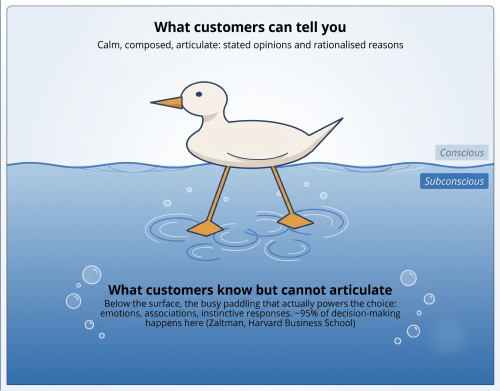
Every year, thousands of new products launch on the back of research that said they would succeed. Concept tests came back positive. Focus groups nodded along. Survey respondents said,
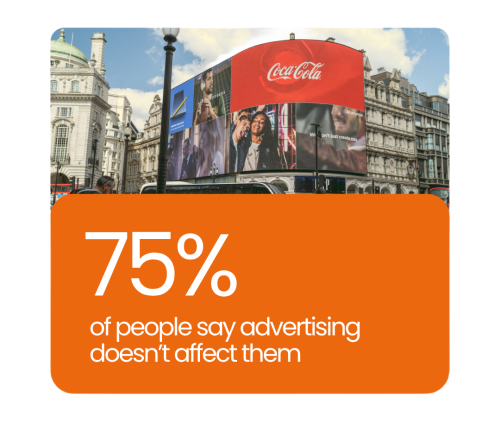
75% of people asked to rate an ad, claim advertising doesn’t affect them.
So what exactly are they rating? And why are we
Subscribe to our email newsletter to keep up to date with our latest insights, news, and findings on market research, implicit testing and our occasional psychological ‘neuro-nuggets’ of wisdom
Please enter your details
You can unsubscribe anytime. For more details review or Privacy Policy.