
convenience store
In Control First: How Implicit Research Mapped a Convenience Store’s Competitive Landscape
Convenience store markets in dense Asian retail environments are among the most competitive in the region: a small


CASE STUDY
In Memory Before the Video Played: Measuring the Impact of a Telecom Brand’s Serie A Sponsorship
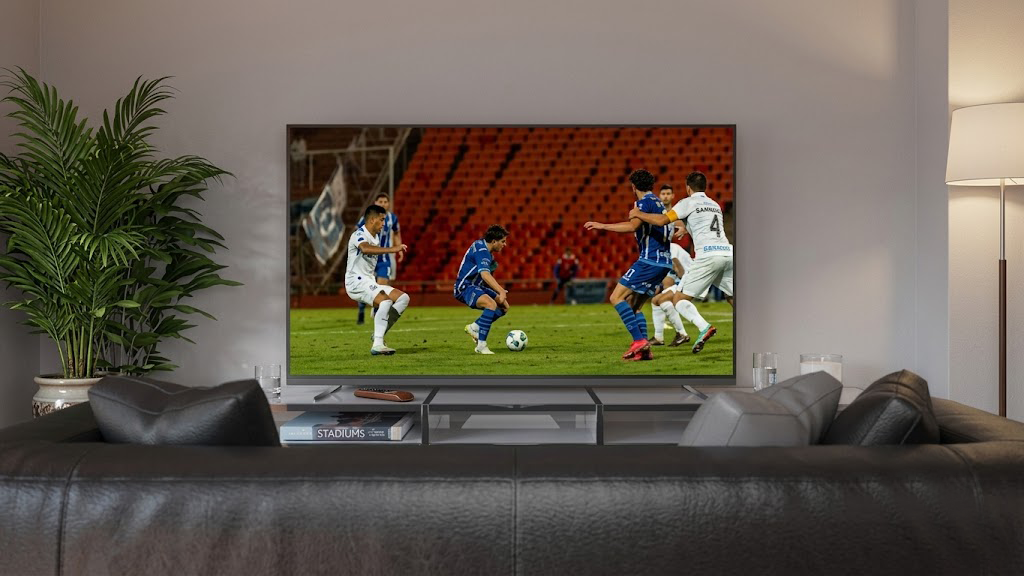
Sponsorship ROI is one of the most contested measurement challenges in marketing.
When a brand invests in the association between its name and a sporting event, the commercial objective is to build positive brand associations in the minds of the sport’s audience, extend brand awareness and consideration among non-customers, and reinforce loyalty among existing ones. But measuring whether those objectives have been achieved, and which specific attributes the sponsorship is building or weakening, requires a methodology that goes beyond post-exposure conscious recall.
This study, conducted with BrainSigns, evaluated the implicit and explicit brand impact of a major Italian telecommunications provider’s Serie A football sponsorship across a nationally representative sample of Italian respondents, split roughly evenly between regular football TV watchers and non-watchers. The study design addressed a specific commercial question: does the football sponsorship generate measurable differences in brand perception between watchers and non-watchers, both before and after exposure to sponsorship content, and which attributes are most strongly moved?
Respondents were recruited across geographic area, gender, age, and customer type, giving a complete competitive picture of the sponsorship’s impact across the telecommunications provider’s own customer base and the wider market. A broad set of brand attributes was evaluated across five dimensions: leadership and national identity, innovation and digital future, quality and value, reliability and client focus, and entertainment.
Traditional quantitative scoring was applied for overall attribute agreement levels. IMPRESS implicit reaction time testing was applied before and after respondents viewed a football-themed slideshow featuring the telecommunications provider’s branding, crowd sound, and sponsorship content.
The before-and-after design allowed the study to measure the video’s specific effect on implicit brand associations, while the watcher/non-watcher split allowed it to identify whether any effects were specific to football’s existing audience or extended to non-football consumers.
The traditional quantitative data produced a clear and commercially useful finding at the conscious level. Football TV watchers rated the telecommunications provider significantly more positively than non-watchers across almost every attribute tested, with only one exception showing no meaningful difference. That pattern held even within their own customer base, football-watching customers rated the brand more positively than non-watching customers, meaning the sponsorship was generating incremental brand lift even among people who already held broadly positive attitudes toward the telecommunications provider.
The most commercially significant finding came from outside their customer base. Among people who use other telecoms providers, those who regularly watched football on TV rated the provider substantially more positively than those who didn’t, a notably strong effect given they weren’t customers at all. For a telecommunications brand competing in a market where switching is common and rational product differentiation is limited, that acquisition-oriented sponsorship effect had direct commercial value.
The most strategically significant finding from the implicit component of the study emerged before the football video was shown at all. In the pre-video IMPRESS implicit test, football TV watchers already held substantially stronger and more positive implicit associations with the telecommunications provider than non-watchers, across multiple attribute dimensions, with football and quality-related associations particularly strong.
Non-watchers, by contrast, held a more general corporate and historical profile of the provider, with weaker associations to football specifically, as expected.
The key commercial finding was that this difference between watchers and non-watchers couldn’t have been produced by the video, because the video hadn’t been shown yet.
The implicit associations football TV watchers held with the telecommunications provider, including the football connection itself, were already active in memory from prior exposure to the sponsorship over time.
The study wasn’t measuring the creation of a new implicit association through a single video. It was measuring the retrieval of one the sponsorship had already built through sustained exposure.
That finding has a specific commercial implication. It confirms that the football sponsorship investment had been effective in building genuine subconscious brand-sport associations over time, to the point where the association was spontaneously active in memory before any specific stimulus activated it. The sponsorship was not dependent on the moment of activation to generate brand benefit.
It was generating ongoing implicit brand equity simply by being part of the sport’s media presence.
The before-and-after comparison revealed how the football video specifically affected the implicit association profile of both audience groups.
For football TV watchers, the video strengthened associations with national identity and modernity, while slightly softening the football association itself, a counterintuitive result the research team attributed to a possible frustration effect: the slideshow used photographic stills rather than match footage, which may have produced a mild disappointment response relative to what the pre-video baseline had set up.
For non-watchers, the video produced more movement overall, shifting the telecommunications provider’s implicit profile away from a generic, historical telecoms image and toward a more digital, connectivity-led, and football-specific one.
That shift was directionally aligned with their likely brand strategy, though a softening of general entertainment associations among this group was a finding worth attention in future creative development.
The study’s segment analysis by customer type added a competitive intelligence dimension to the sponsorship measurement.
The telecommunications provider’s implicit associations were, unsurprisingly, stronger among its own customers than among competitors’ customers. But competitors’ customers who regularly watched football on TV showed meaningfully more positive implicit associations with the provider than those who didn’t.
That points to the specific mechanism through which football sponsorship generates acquisition value. Non-customers exposed to the telecommunications provider’s sponsorship through regular football viewing build more positive implicit associations with the brand than those who aren’t exposed.
Those associations don’t generate immediate switching, but they lower the psychological barrier to considering the provider when a switching decision eventually arises.
This study demonstrates the value of the before-and-after implicit design for sponsorship measurement. Without the pre-video implicit test, the only implicit finding available would have been the post-video profile, confirming the telecommunications provider had broadly positive implicit associations, but not distinguishing between associations built by the sponsorship specifically, associations that pre-existed from other brand communications, or associations created by the video itself.
The addition of the pre-video implicit test revealed the most commercially important finding in the study: that the implicit association between the telecommunications provider and football was already active in the minds of football TV watchers before any stimulus was presented. That finding proved the sponsorship’s effectiveness at building lasting subconscious brand associations, rather than merely demonstrating that the brand had generally positive awareness.
The video’s role, confirmed by the before-after comparison, was to refresh and refocus associations that already existed, strengthening national identity and modernity while sharpening the sport association from a general football feeling toward something more specific and current.
The same before-and-after implicit sponsorship evaluation methodology is available through SSR Platform for any brand seeking to measure the genuine subconscious brand impact of a sports, cultural, or media sponsorship investment.
The study generates a BRAIN model of the provider’s implicit brand association profile across all five attribute dimensions and both watcher and non-watcher audience segments, before and after sponsorship content exposure.
That model feeds into Amethyst, which can evaluate future sponsorship creative approaches, content treatments, activation materials, or brand claims against the established implicit profiles before any production investment is committed.
For a telecommunications brand in a competitive market where brand perception is a primary driver of switching consideration, the confirmation that football sponsorship was building genuine subconscious brand equity among competitor customers was among the most commercially valuable findings the study produced.
The association was already in memory. The implicit data proved it. The video showed what was needed to keep it fresh.
If you work in telecommunications, media, sports sponsorship, or any category where the implicit brand impact of sponsorship investment needs to be measured precisely rather than estimated, we would welcome a conversation.
If you’d like to understand how this approach can be applied to your own challenge, get in touch with one of our market research experts, here.
Convenience store markets in dense Asian retail environments are among the most competitive in the region: a small
Sponsorship ROI is one of the most contested measurement challenges in marketing. When a brand invests in the

A product that performs well in one market does not automatically translate to another. The visual language of packaging, the colours that signal quality, the