CASE STUDY

How an Australian Bank Rebuilt Trust After a Sector-Wide Crisis

The Challenge

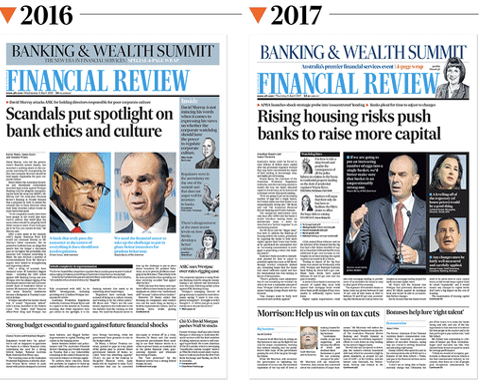
A series of financial scandals in the Australian banking sector in 2016, included scrutiny over insurance selling, alleged market manipulation, foreign exchange conduct, and financial advice breaches. Trust in Australian businesses dropped 7 points below the global average, while the Australian Ethics Index fell 6 points.

While the big four were the primary targets of the media, the “trust crisis” spilled over to the entire financial sector as reported by the BBC 4th Feb 2019). For the Commonwealth Bank (CBA), this posed a serious threat, since it has built a reputation for being Australia’s most trusted bank.

So, they contacted Split Second Research to know the extent to which trust was being lost, and what they could realistically do to influence it.

The Solution

Second Research worked with CBA to get a more holistic understanding of how consumers were responding to banks at an emotional level, beyond self-reported emotions.

We devised a research methodology that was a combination of implicit reaction-time testing and a more traditional ‘explicit’ survey. We explored public perception of high-street banks and deconstructed how people perceived trust and what it meant to them. This allowed us to map the emotional and functional pathways consumers follow, often subconsciously, when deciding whether a bank feels reliable, competent and worth staying with.

The aim was to gain clarity on which elements have an impact, and which ones are just noise.

The Outcomes

Our research showed that the client brand was being affected by the wider negative sentiment towards banks, even when criticism wasn’t aimed at them directly. We used this to advise how the brand could counteract the trust crisis.

We identified four clear drivers that had the strongest influence on trust:

These insights were used by the client in their communication strategy, impacting how the brand presented itself visually and how it talked about its role and expertise. Instead of broad reassurance messaging, the bank was able to focus on the aspects that most significantly impacted trust.

This helped the brand stabilise perceptions and rebuild confidence more quickly than competitors responding with less targeted approaches.

In this case, traditional research alone would have obtained the rational accounts about trust in banks, and not the more informative subconscious and more intuitive factors that influenced how they about the trust crisis. Many of the strongest influences on trust weren’t things consumers could easily articulate themselves.

FROM THE CLIENT

Our understanding of the impact of the crisis on our bank helped us to improve our standing among consumers and to regain trust faster than our competitors were able to. Our comms strategy would have missed important elements without the help of the research conducted by Split Second Research.

If you’d like to understand how this approach can be applied to your own challenge, get in touch with one of our market research experts, here.

Case Studies

Understanding Emotional Responses to Fragrance in Context
Fragrance in context

Understanding Emotional Responses to Fragrance in Context

A global fragrance company wanted to profile how four new fragrances were experienced, with a specific focus on their functional emotional use.
The goal was to understand which fragrances naturally support different emotional states, for example, which scents help calm or reduce anxiety in work environments, and which feel more appropriate in contexts requiring reassurance or comfort, such as high-trust or service-led settings.
This introduces a more

Read More
celebrity tv partner match
Celebrity & TV Sponsorship Fit

Finding the Right Fit: Why Brand and Partner match matters

Picking the right partner for a brand, whether that’s a celebrity or a sponsor, is harder than it looks. High profile and well-liked doesn’t automatically mean the right fit, and a mismatch can do real damage to a brand even when it’s not immediately obvious why.
Two clients came to us with versions of

Read More
Scroll to Top