Understanding Emotional Response to Email Marketing
Email marketing is one of those things every brand uses, but very few understand what it actually does to their brand. Some emails feel engaging and

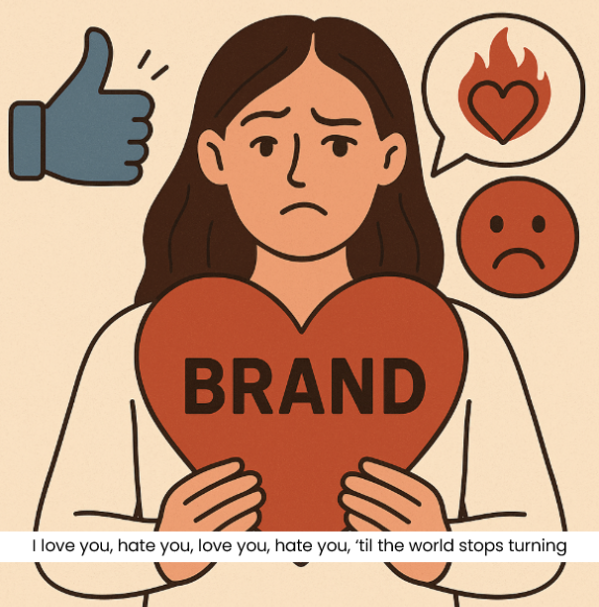
Psychologists have long suspected that the human mind can be home to some awkward roommates - two attitudes toward the same thing that can’t quite agree. We call this ambivalence, and it shows up everywhere: from politics to pudding, from friendships to public figures.
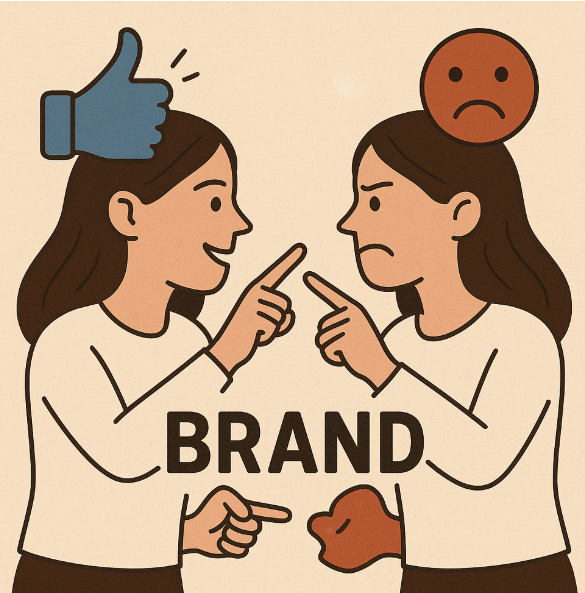
But ambivalence doesn’t stop at people. Can we also love and hate a brand or product at the same time?
The Psychology of Ambivalence
Ambivalence in Everyday Consumption
Suggests that one “true” attitude exists, but explicit measures may differ from implicit ones due to self-presentation or awareness gaps.
Explicit Self-Report Measures. Personality and Social Psychology Bulletin, 31(10), 1369-1385. https://doi.org/10.1177/0146167205275613 (Original work published 2005)
Implicit attitudes (IAT) toward the same goods tended to skew more positive, suggesting that the negative side of ambivalence was less automatically activated. In contrast, brands with strong identity signalling (e.g., Nike vs. Adidas) often showed smaller implicit–explicit gaps — people’s brand preferences were more consistently positive or negative.
Nordgren, L. F., van Harreveld, F., & van der Pligt, J. (2006). Ambivalence, discomfort, and motivated information processing. Journal of Experimental Social Psychology, 42(2), 252–258. https://doi.org/10.1016/j.jesp.2005.04.004
Shows that contradictory attitudes trigger increased cognitive effort to resolve conflict.
Wilson, T. D., Lindsey, S., & Schooler, T. Y. (2000). A model of dual attitudes. Psychological Review, 107(1), 101–126. https://doi.org/10.1037/0033-295X.107.1.101
Apparent contradictions are explained as two attitudes existing in different memory systems, only one of which is active at a given moment.
van Harreveld, F., van der Pligt, J., & de Liver, Y. N. (2009). The agony of ambivalence and ways to resolve it: Introducing the MAID model. Personality and Social Psychology Review, 13(1), 45–61. https://doi.org/10.1177/1088868308324518
Ambivalence leads to discomfort, motivating attitude change, information seeking, or avoidance.
Zeki, S., & Romaya, J. P. (2008). Neural correlates of hate. PLoS ONE, 3(10), e3556.
Research shows that love and hate share two areas of the brain, namely the putamen and the insula.

Email marketing is one of those things every brand uses, but very few understand what it actually does to their brand. Some emails feel engaging and

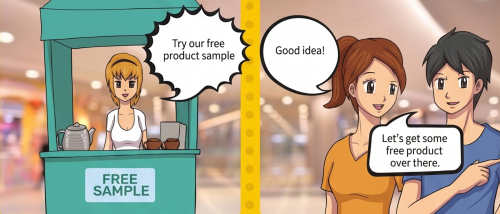
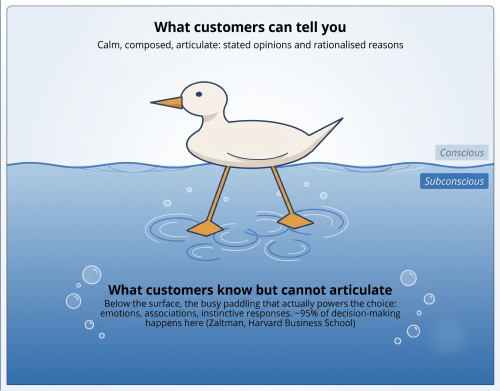
75% of people asked to rate an ad, claim advertising doesn’t affect them.
So what exactly are they rating? And why are we

A Scandinavian TV channel was looking at acquiring broadcast rights across several European football leagues and needed to know which ones were actually
Complete an enquiry form to arrange a meeting with us: