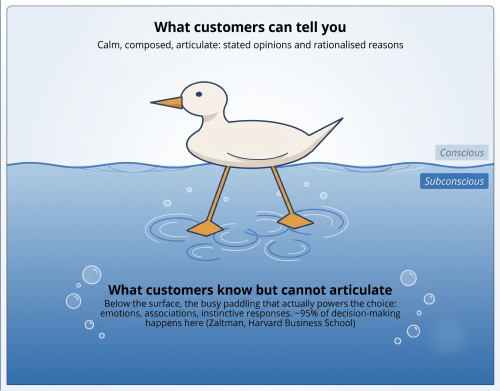
Brand positioning is a critical component of any marketing strategy. Essentially, it defines the unique features, benefits, and values that distinguish a brand from its competitors. To develop an effective brand positioning strategy, it is essential for brand managers to understand how consumers perceive their brand in the market. Implicit testing is a powerful market research tool that can be used to identify consumers’ subconscious associations with a brand. These associations could be; specific attributes, features, or occasions. By measuring these associations in combination with explicit surveys, the resulting insights can be extremely beneficial. Brand managers can gain insights into their brand positioning against competitors and better understand their brand’s unique selling points (USPs).
Brand positioning evaluation involves identifying how consumers perceive the brand in terms of how it differs from other brands in the same category. Furthermore, these evaluations enable brand managers to analyse the brand’s persona or value proposition. Additionally identifying how the brand can be differentiated from its competitors. Understanding these factors can help the brand become more “top of mind” and stand out in a crowded market. By leveraging insights from implicit testing and brand positioning evaluations, brands can create a distinct and compelling brand positioning strategy. Ultimately, the insights can inform a strategy that better resonates with consumers and drives business success.
Both implicit and explicit testing can be used to identify a brand’s strengths and weaknesses. In addition, it can identify the opportunities and threats posed by its competitors. By conducting a brand positioning SWOT Analysis, brand managers can gain a more comprehensive and accurate understanding of their brand’s position in the market. Using the resulting insights from both implicit and explicit surveys gives brand managers more meaningful, well-rounded insights.
Great things can happen in a split-second
Start A Conversation
Complete an enquiry form to arrange a meeting with us:
Our blog

Finding the Right Fit: Why Brand and Partner match matters
Picking the right partner for a brand, whether that’s a celebrity or a sponsor, is harder than it looks. High profile and well-liked doesn’t automatically mean the right fit, and a mismatch can do real damage to a brand even when it’s not immediately obvious why.
Two clients came to us with versions of

Explaining the Brand Gap
There’s a gap in most markets that doesn’t show up in product specs or competitive audits. It lives in the consumer’s mind, and it is the space between what people are looking for from a brand and what they actually perceive the brands around them to deliver.
That gap is called a brand gap, and finding it is

Choosing a Brand Name Through Implicit Insight
Naming a brand is harder than it looks. A London-based branding agency was restructuring and needed a new name, one that could carry real meaning across six brand values and